

 Arabic
 French
 Indonesia
 Portuguese
 Russian
 Spanish
 Vietnamese

 +86-157-2476-6919
Monthly Archives: January 2022
-
January 09, 2022
Detergent Chemical used in daily life
What are detergents?
Detergents are surfactants that possess cleansing properties when they are present in dilute solutions. They can remove unwanted substances/soils from substrates. There are many types of detergents; most of the time, they are the sodium salts of long-chain alkyl hydrogen sulfate or a long chain of benzene sulphonic acid. Alkylbenzene sulfonates are the most common detergents, a family of soap-like compounds more soluble in hard water.
Detergents are used for various purposes, such as household cleaning, fuel additives that have important use (prevent fouling) in carburetors and fuel injector components of internal combustion engines, and biological reagents. Detergents are either in powder form or are concentrated solutions.
-
January 09, 2022
Mining Operation in Nigeria
With plans to revise the Nigeria Minerals and Mining Act (NMMA), the Nigerian government has taken the first step towards restoring its mining sector to its former glory and beyond.
A little history
The Nigerian land is blessed with outstanding mineral reserves. Until 1967, the country was a major exporter of coal and tin. However, the instability of the 1967-1970 period and the following oil boom of the1970s dwarfed the mining sector to the extent that it only makes up 0.3% of the GDP today – In comparison, the oil sector contributes 7.5% of the GDP.
In 2007, the country deregulated solid mineral mining to increase private sector investment. The former plan also incentivized multinational mining companies with tenure security and similar benefits.
However, the biggest hurdle
-
January 07, 2022
What is Citric Acid Monohydrate 99%?
Citric Acid Monohydrate is an important Industrial Chemical compound. Usually encountered as a white solid, it's a weak organic acid. It occurs naturally in citrus fruits. In biochemistry, during the metabolism of all aerobic organisms, it's an intermediate within the acid cycle.
Additionally, Citric Acid is found in Anhydrous and Monohydrated form.
While Anhydrous Citric Acid has no water of crystallisation, Monohydrate Citric Acid has a water molecule linked with each citric acid molecule. Moreover, the chemical formula of Citric Acid Anhydrous is C6H8O7, and the chemical formula of Citric Acid Monohydrate is C6H8O7·H2O.
Citric Acid Monohydrate 99%
What
-
January 06, 2022
What is Froth Flotation?
Froth floatation is the process that involves separating hydrophobic substances from hydrophilic ones. It is a method that was first used by the mining industry. After many years, it was adopted for mineral processing, waste-water treatment, and paper recycling. The process is considered one of the most successful technologies of the 21st century.
The process enhances the recovery of valuable minerals during the mining process. It is the most effective method for upgrading and recovering Sulfide ores. This process can also retrieve important minerals such as lead-bearing and copper-bearing minerals. Mechanized mining has also been adopted to get good-grade metals from lower-grade ore.
The froth floatation process involves the use of many chemicals. There are chemicals known as collectors whose function is essentially to trap ores. The collectors are mostly anionic sulfur ligands and Xanthate salts.
There is also another
-
January 06, 2022
What Is Sodium Selenite?
The formula for the inorganic compound Sodium Selenite is Na2SeO3. This salt is a colorless, transparent substance. The most common water soluble selenium compound is the pentahydrate Na2SeO3(H2O)5.
Sodium Selenite
Chemical and Physical Properties of Sodium Selenite
Chemical formula
Na2O3Se
Molar mass
172.948 g·mol−1
Appearance
-
January 06, 2022
Cement Usage
The Brazilian Cement industry recorded a 2.3% growth in November with 5.359 million tons. According to SNIC, Brazil’s cement association, the decelerating growth was accompanied by market stabilization from the waning low base effect of Covid-19.
In comparison, the April growths rate was at 20.8%. Up till November of this year, exports had seen a 46.8% decline while domestic sales went up 6.8% year-on-year with 59.6 million tons.
In 11M21, exports grew from 244,000 tons in the11M20 to 386,000 tons, a 58.2% year-on year growth.
What’s the takeaway?
The cement sector is likely to have tight financial outcomes as high input costs and logistics continue to affect it.
The disappointing growth figure was unable to retrieve consumer
-
January 05, 2022
What is Citric Acid Anhydrous?
Citric Acid Anhydrous is an important Industrial Chemical and is commonly found in various citrus fruits (lemon, limes, etc.). It belongs to the tricarboxylic Acid category, which is why it is considered a weak organic acid as well. It can be found in white coloured crystals.
Additionally, Citric Acid is available in two forms: anhydrous and monohydrated.
While Anhydrous Citric Acid has no water of crystallisation, Monohydrate Citric Acid has a water molecule linked with each citric acid molecule. Moreover, the chemical formula of Citric Acid Anhydrous is C6H8O7, and the chemical formula of Citric Acid Monohydrate is C6H8O7·H2O.
Citric Acid Anhydrous
-
January 03, 2022
What are Caustic Soda Flakes (Sodium Hydroxide Flakes)?
Caustic Soda Flakes is a highly versatile and inorganic compound with a white crystalline structure. It is an industrial chemical and is used in many manufacturing processes, cleaning agents, and home food products. Sodium Hydroxide Flakes has numerous characteristics but is mainly known for its highly corrosive properties.
Caustic Soda Flakes (Sodium Hydroxide Flakes)
What are Caustic Soda Flakes used for?
Sodium Hydroxide Flakes has various applications, from pharmaceutical industry to the manufacturing industry. Below are some of its popular uses:
- It’s an essential component in manufacturing soaps and detergents for both
-
January 02, 2022
Textile Industry
What is Textile Industry?
The textile making industry is such a large one. Clothing is one of the most important needs for men. As such, the demand for clothes will always be high as long as men exist. Also, it will always give birth to an increase in the size of the textile industry.
The textile industry involves a lot of activities. This industry's processes can be divided into 5 major types. They include cultivating and harvesting cotton, the preparatory process, spinning, weaving, or knitting, and finishing. The finishing process is where chemicals are mostly applied out of all the processes.
The finishing process of textile making involves a combination of chemical and physical processes. It involves improving the surface level of
-
January 02, 2022
Caustic Soda Flakes in a Storage Facility
With widening applications and post-COVID market recovery, the caustic soda market value is projected to grow by 3.3% CAGR and reach USD 59.63 Billion by 2028 according to Vantage Market Research.
Rising Demand
The global chemical industry accounts for nearly 40% of caustic soda consumption. Caustic soda is a fundamental requirement for several industries, including pulp and paper, alumina, glass manufacturing, textiles, soap and detergents, water treatment, and more.
The market is observing rising demand for two reasons, notably more than other factors. First, caustic soda is increasingly being required in the chlorinated methanes and solvents along with plastics and PVCs.
Secondly, the major players in the Chemical industry, which include China, India, Germany, the United States, and Singapore, are expected to raise both consumption and demand
-
Choosing the Right Sodium Carbonate Grade: An Industrial Buyer's Guide
 August 19, 2026
-
How We Helped our Customer Stop Losses with the Right Chemicals | Camachem Case Study
 July 27, 2026
-
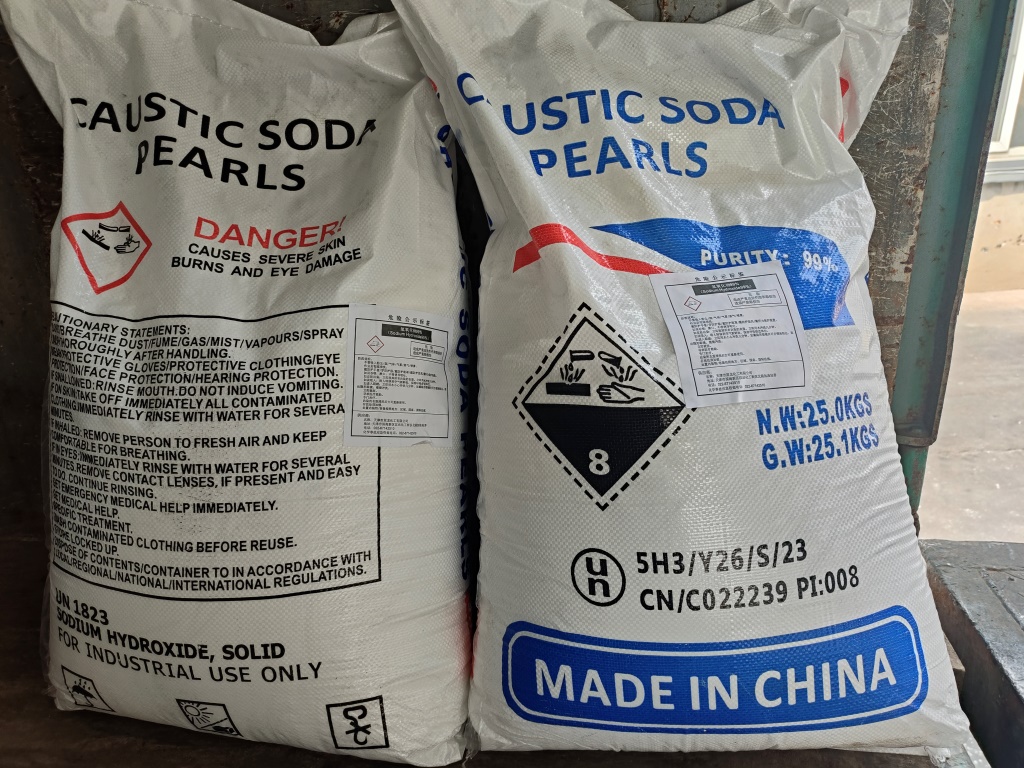
What is the Difference Between Caustic Soda Pearls and Caustic Soda Flakes? (2026 Update)
 July 26, 2026
-
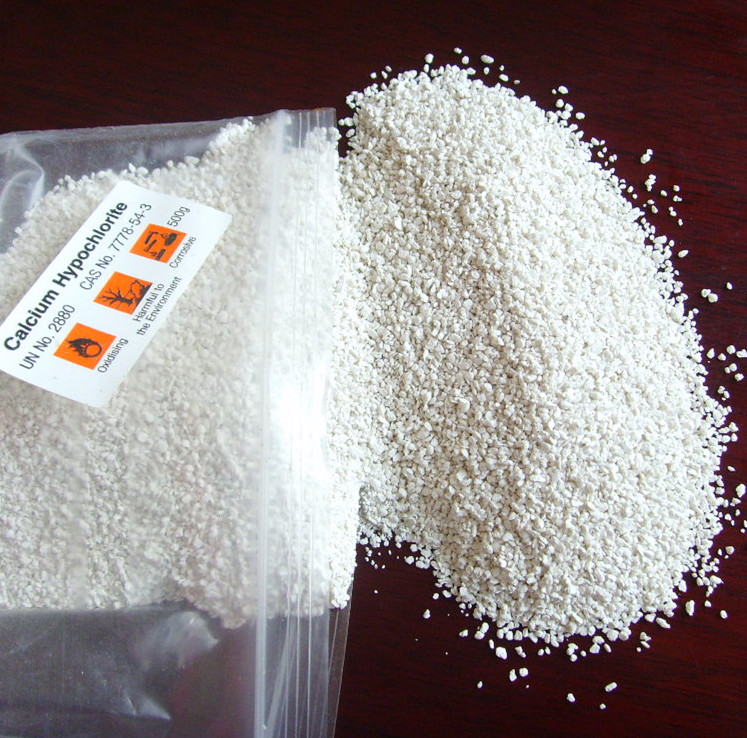
5 Differences You Need To Know About Bleach And Chlorine
 July 24, 2026
-
Top 10 Chemicals Used in Cleaning and Sanitation
 July 23, 2026